
Social media sites are an intrinsic aspect of modern living, as they provide socialization, entertainment, as well as instant access to information. At the same time, the influence of social media sites on mental health is an ever-evolving issue that raises several concerns. There have been conflicting findings in studies on the association between social media usage (SMU) and psychological problems, such as depression, anxiety, as well as stress. Recently, Jones et al. introduced a novel approach in examining these correlations.
Importance of Objective Analysis
Some past research was highly reliant on self-reported data, often leading to biases and randomness in the findings. To address such concerns, Jones et al. used valid measures, such as screen time data from smartphones, to parse SMU. Such a fresh method gives a better insight into the impact of SMU use upon mental health and ACC.
Study at a Glance
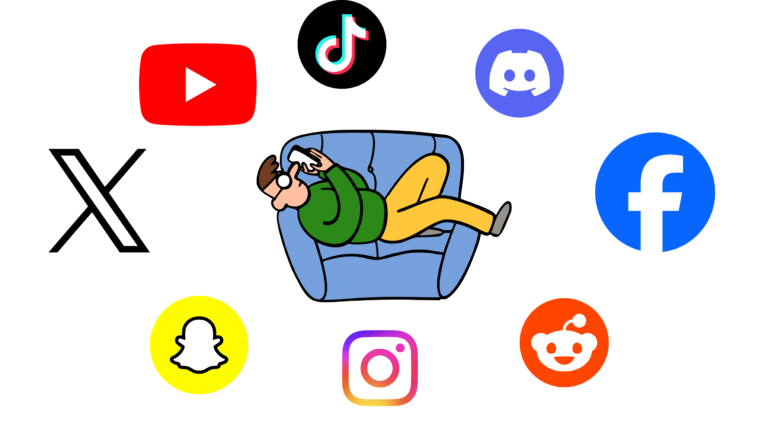
The study consisted of 425 participants, mostly young adults, who regularly submitted their usage of platforms such as TikTok, Instagram, Facebook, Snapchat, and Twitter/X each week. The psychological distress of the participants was determined through the DASS-21 test, and attentional control, which was measured through the antisaccade task, tests the capacity to ignore distracting stimuli and remain fixed on one point.
Jones, C. N., Rudaizky, D., Mahalingham, T., & Clarke, P. J. F. (2024). Investigating the links between objective social media use, attentional control, and psychological distress. Social Science & Medicine, 361, 117400. https://doi.org/10.1016/j.socscimed.2024.117400
Key Findings
Social Media Usage and Psychological Distress:
- Total usage of social media was not significantly associated with overall psychological distress.
- However, use of Facebook was weakly linked with elevated psychological distress.
SOCIAL MEDIA USE AND ANXIETY:
A slight positive association between SMU and anxiety was found; this explained only 1.4% of the overlapping variance.
Social Media Use and Attentional Control:
Contrary to expectations, a positive relationship was noted with inhibitory attentional control, suggesting that social media use is not detrimental to focus. Surprisingly, SM the use of TikTok, in particular, was positively related to attentional control, maybe because of its engaging contents.
Moderation by Attentional Control:
This study did not find any indication that attentional control moderates the relationship between SMU and psychological distress or anxiety.
What This Research Adds to Existing Research in Its Field
Using objective methods and examining each platform individually, the research finds complex links between:
- Interaction manners on Facebook, as well as algorithms, could cause psychological disorders.
- TikTok’s short video format could improve some aspects of cognition, such as filtering out distractions or shifting attention.
- Such observations contradict the belief that any use of social media is necessarily harmful.
Implication for Mental Well-being
Tailored Interventions
Facebook might benefit from efforts to mitigate its psychological effects, for instance, through the promotion of positive content and avoiding or steering away from stressful content.
User Education:
Teaching consumers about the difference between active and passive engagement can assist in enhancing mental health. Active engagement, such as the act of sharing content, is typically more positive.
Further Research:
In subsequent studies, it would be valuable to examine other cognition functions, such as sustained attention and working memory, and analyze the different influences of engagement styles on mental health outcomes.
Limitations and Future Directions
Though the strength of the study encompasses the use of objective variables, its limitation to studying the usage of mobile devices alone, and neglecting the usage of social media platforms on computers, remains a drawback. Moreover, by studying only inhibitory control through the antisaccade task, it did not investigate any other aspects of attention.
The study conducted by Jones et al. highlights the overall significance of adopting an intricate perspective when exploring relationships between SMU, mental health issues, and cognition. The recent study has managed to move ahead of relying upon self-reported studies and prove that the relationship between SMU and distress is more intricate than previously perceived. Even though some SMU platforms, such as Facebook, could be detrimental to one’s health and wellness, others like TikTok could be rather unexpectedly beneficial to cognition, platform-specific strategies to better navigate the role of social media in mental health.